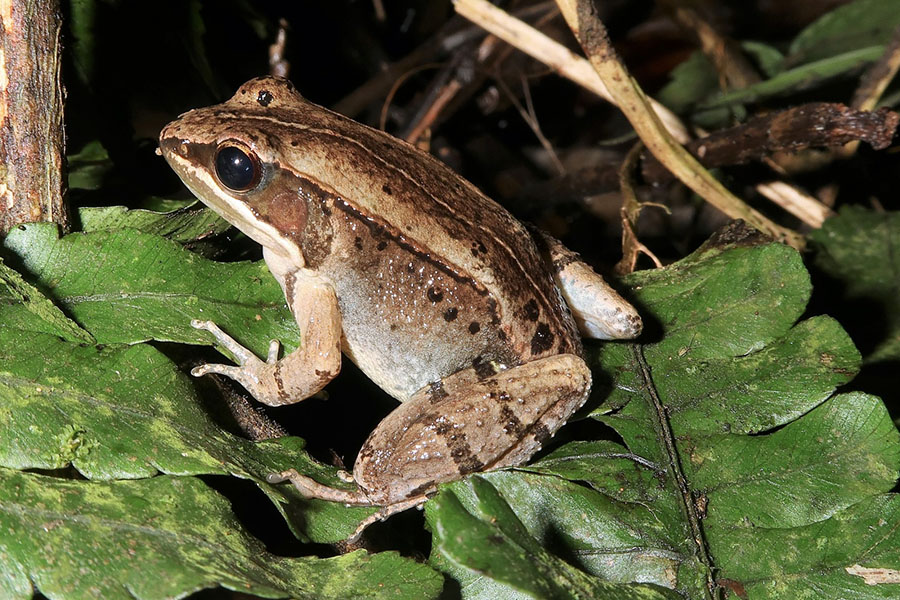
Cover image caption: A male Yuchi music frog, a newly identified species. (photograph by Chun-Fu Lin).
Among Taiwan’s native amphibians, the frog long identified as Nidirana okinavana has the narrowest known distribution and the smallest remaining population size. It was previously thought to occur only on Ishigaki and Iriomote Islands in the southern Ryukyus and in Nantou County, Taiwan. A collaborative study by National Taiwan Normal University, the Taiwan Biodiversity Research Institute of the Ministry of Agriculture, and the Taiwan Forestry Research Institute demonstrated that the Taiwanese and Ryukyu populations differ markedly and should be treated as separate species. This taxonomic revision adds one more species to Taiwan’s endemic frog fauna. The newly named Yuchi music frog is now also recognized as one of the most endangered frogs in the world.
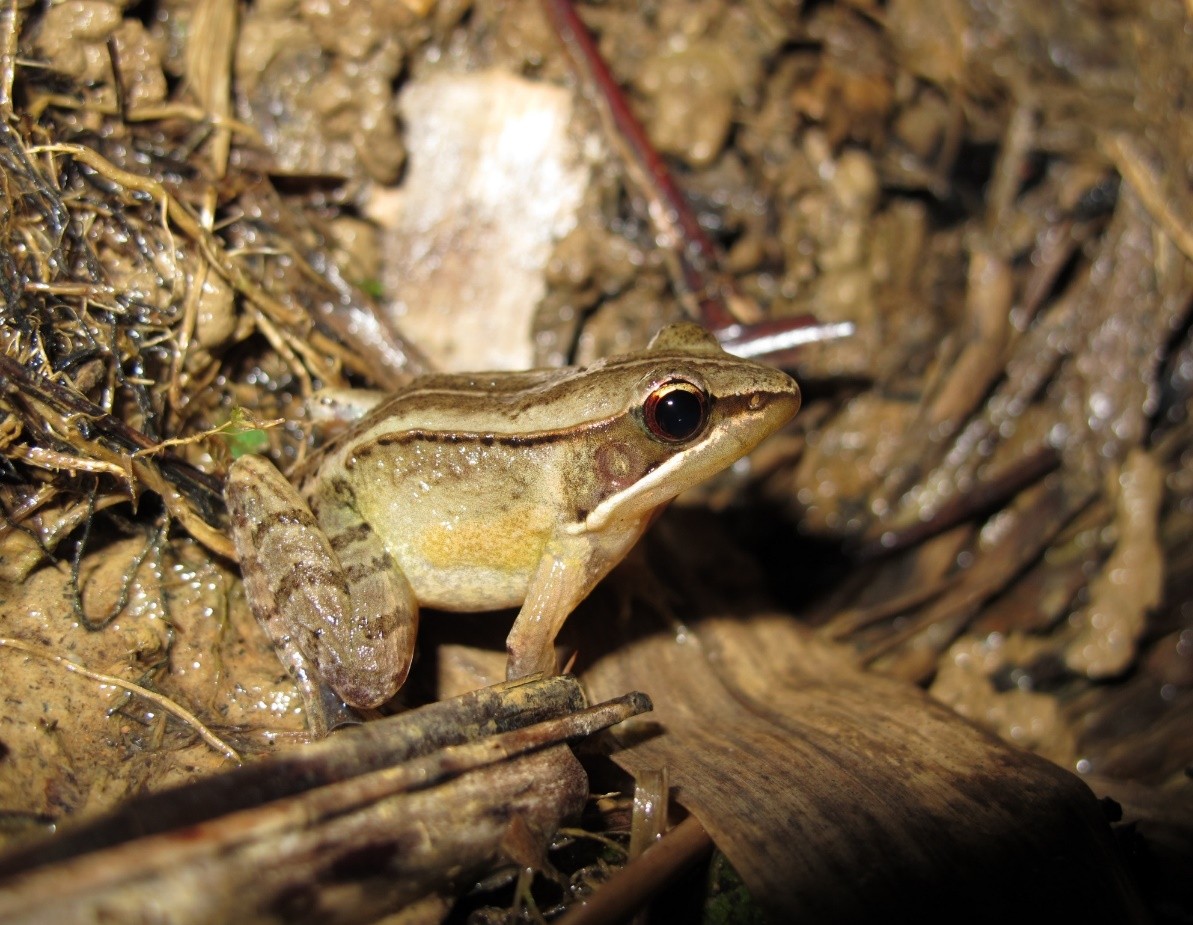
Caption: A female Yuchi music frog. (photo by Chun-Fu Lin).
The discovery of the Yuchi music frog can be traced back to the early 1980s. At that time, Professor Shyh-Huang Chen(陳世煌), then serving as a teaching assistant at National Taiwan Normal University, encountered this frog during collecting trips at the Lienhuachih Research Center of the Taiwan Forestry Research Institute, then known as the Lienhuachih Branch. He described it as a frog that resembled the East China music frog but was noticeably smaller in size. Professor Chen suspected that it represented an undescribed species, but because molecular evidence was not yet available four decades ago, the species was never formally published. From the 1990s onward, most taxonomists identified it as the same species as the frog found on Ishigaki and Iriomote, namely Nidirana okinavana. Because only two populations have ever been found in Yuchi Township, Nantou County, the species has long remained endangered in Taiwan.
Several years ago, the research team led by Professor Si-Min Lin of NTNU’s Department of Life Science began a genetic study of this frog. Because Taiwan and the Ryukyus are geographically far apart, the original aim was to determine the phylogenetic relationship and evolutionary history linking the two populations. Unexpectedly, the genetic analyses revealed clear divergence between them. A close reexamination of specimens collected over many years further showed evident differences in body size and patterning. When placed side by side, the Taiwanese frogs are conspicuously smaller than their Japanese counterparts. They also bear significantly more markings on the legs. Numerous other body proportions differ as well.
Vocalization provided another crucial line of evidence for species differentiation. Advertisement calls are the primary means by which male frogs attract females and are also central to species recognition. The team therefore compared the call spectra of frogs from Taiwan and Japan. Because the Taiwanese frogs are smaller, their calls are faster, contain more syllables, and have a higher fundamental frequency. Taken together, these three lines of evidence – genetics, morphology, and call structure – confirmed that the Taiwanese population represents a distinct new species. The findings were published in the international zoological taxonomy journal, ZooKeys.
The species was given the Latin name Nidirana shyhhuangi in recognition of Professor Shyh-Huang Chen’s major contribution to its discovery; the specific epithet is a Latinized form of his given name, Shyh-Huang. Because the formal description of a new species requires a designated series of type specimens, the researchers searched through NTNU’s old specimen collections and discovered that Professor Chen had already designated type specimens as early as 1984. He had even attached labels identifying them as the “Puli frog,” in preparation for formally describing the species as new. Fluid-preserved frog specimens require careful adjustment of formalin and alcohol concentrations to prevent shrinkage caused by poor preservation. Yet this series remains in excellent condition to this day. The specimens appear remarkably well preserved, reflecting Professor Chen’s extensive experience and expertise in traditional taxonomy.
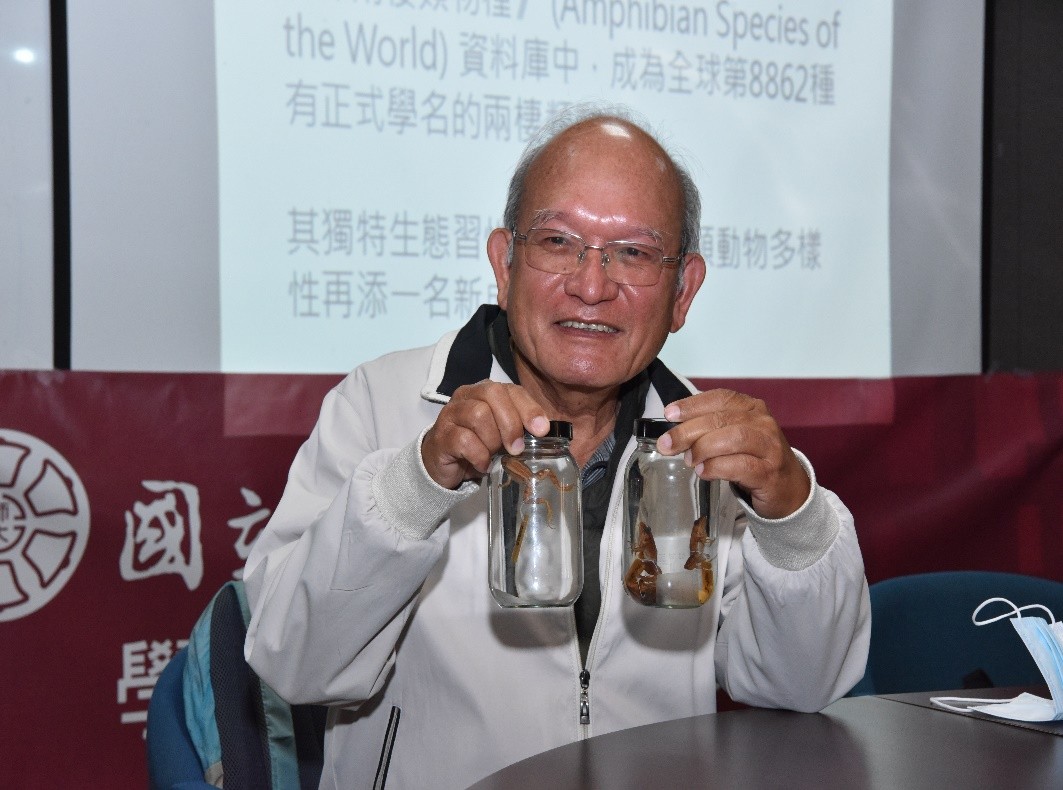
Caption: Retired NTNU Department of Life Science professor Shyh-Huang Chen with the specimens he prepared.
By naming the species after Shyh-Huang and converting Professor Chen’s valuable collections into the type specimens that are foundational to taxonomy, the research team has in a sense fulfilled the wish he was unable to complete before retirement. In addition to the Yuchi music frog, Professor Chen described the Taiwan alpine skink, an endemic high-elevation lizard species, in the 1980s. He was also among the earliest Taiwanese herpetologists to study endemic high-mountain salamanders.
As for the Chinese common name, most Asian species known as music frogs are currently named after places – for example, the Ryukyu music frog, the Hainan music frog, and the Chongqing music frog. The team therefore referred to the administrative district in which Lienhuachih is located, Yuchi Township in Nantou County, and revised Professor Chen’s original provisional name, “Puli frog,” to “Yuchi music frog” so that the name accurately reflects the species’ true distribution.
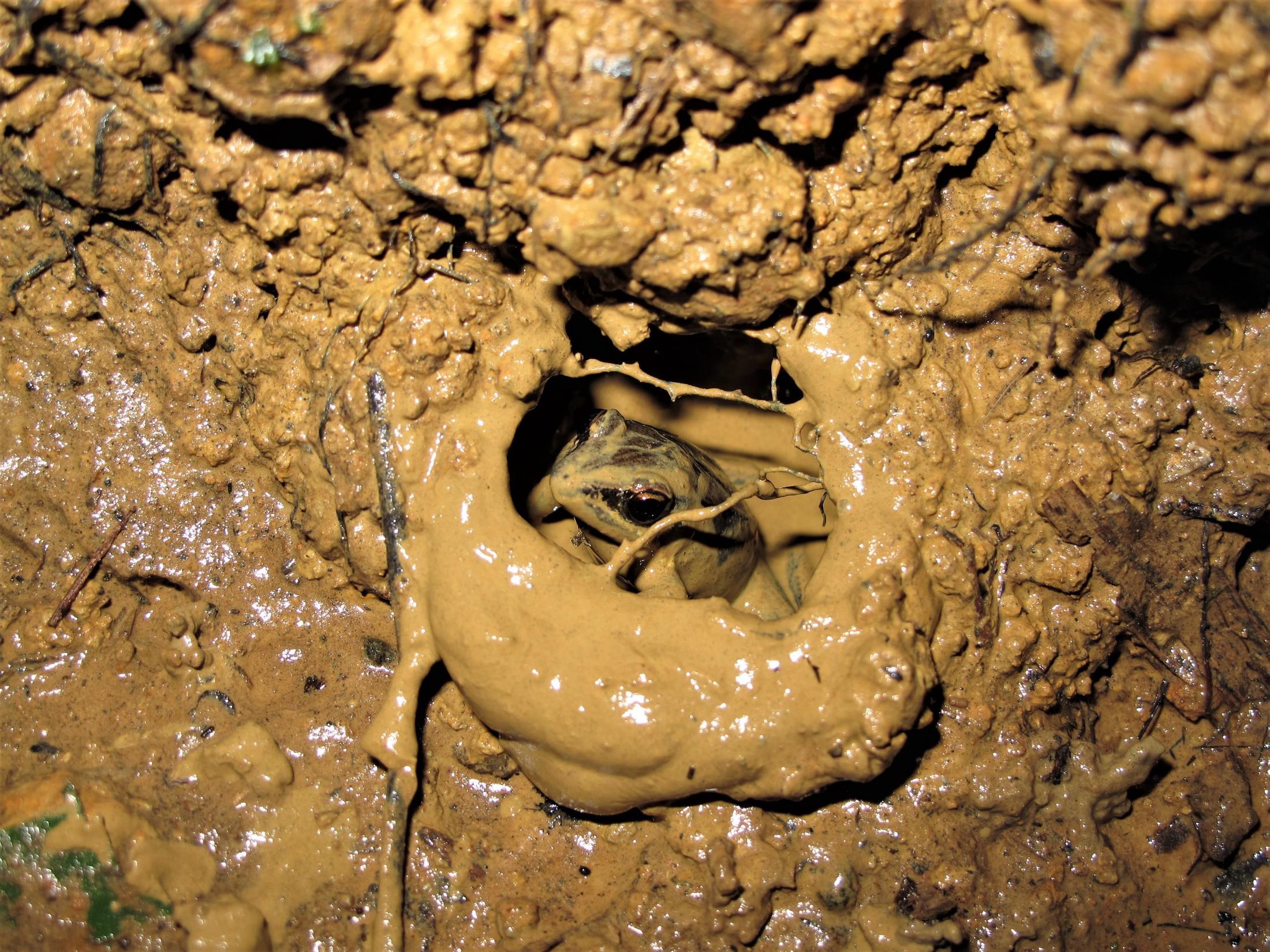
Caption: Mud nest of the Yuchi music frog (photo by Chun-Fu Lin).
The breeding behavior of the Yuchi music frog is highly unusual. It is the only frog species in Taiwan known to construct mud nests. During breeding season, males excavate urn-shaped mud nests in the earthen banks beside ponds and call from inside them. Attracted by the call, females approach, and the pair deposits eggs in the nest. The small tadpoles hatch within the mud nest and remain there until the next heavy rain washes the structure away, allowing them to return to the water to feed and grow. Precisely because of this specialized reproductive behavior, however, the Yuchi music frog is extremely sensitive to human disturbance. Any disturbance, alteration, or concrete reinforcement of pond-side slopes can severely disrupt its breeding.
According to the 2024 Red List of Amphibians in Taiwan, published last December by the Taiwan Biodiversity Research Institute, the frog previously identified as Nidirana okinavana was already listed as Nationally Critically Endangered (NCR). Now that the Yuchi music frog has been split from the Ryukyu music frog, it is recognized as Taiwan’s newest endemic species. Globally, its populations are confined to wetlands around Lienhuachih and Sun Moon Lake, with a total area of occupancy of only about 0.014 square kilometers. The two populations are isolated from one another, and the adult population is estimated at only approximately 300 to 700 individuals. This makes the species one of the most endangered frogs in the world. Under IUCN Red List criteria, it clearly qualifies as a globally threatened species.
At present, the Forestry and Nature Conservation Agency of the Ministry of Agriculture, the Taiwan Biodiversity Research Institute, the Taiwan Forestry Research Institute, the Taipei Zoo, and other institutions have already begun active conservation work. Even so, the species may still face potential threats in the future, including periodic fires, invasive species, and land development around Sun Moon Lake. Meeting these challenges will require coordinated action across more institutions. Clarifying a species’ taxonomic status is the first step in any conservation program for endangered species. In addition to underscoring the severity of the Yuchi music frog’s conservation situation, this study also provides guidance for future ex situ recovery efforts. More broadly, it shows that even on an island as small as Taiwan, the richness and complexity of biodiversity are still widely underestimated.
(This article was provided by The Center of Public Affairs.)
Report : https://www.youtube.com/watch?v=lVBP03DyAn4&t=4s
Source:
Lin C-F, Chang C, Matsui M, Shen C-C, Tominaga A, Lin S-M (2025) Description of a new music frog (Anura, Ranidae, Nidirana) critically endangered in Taiwan. ZooKeys 1229: 245-273. https://doi.org/10.3897/zookeys.1229.139344